
Open : 9:00am to 5:00pm weekdays


Office Address
4025 Pleasantdale Rd, Suite 250 Atlanta, GA 30340

Phone Number
404-298-1314

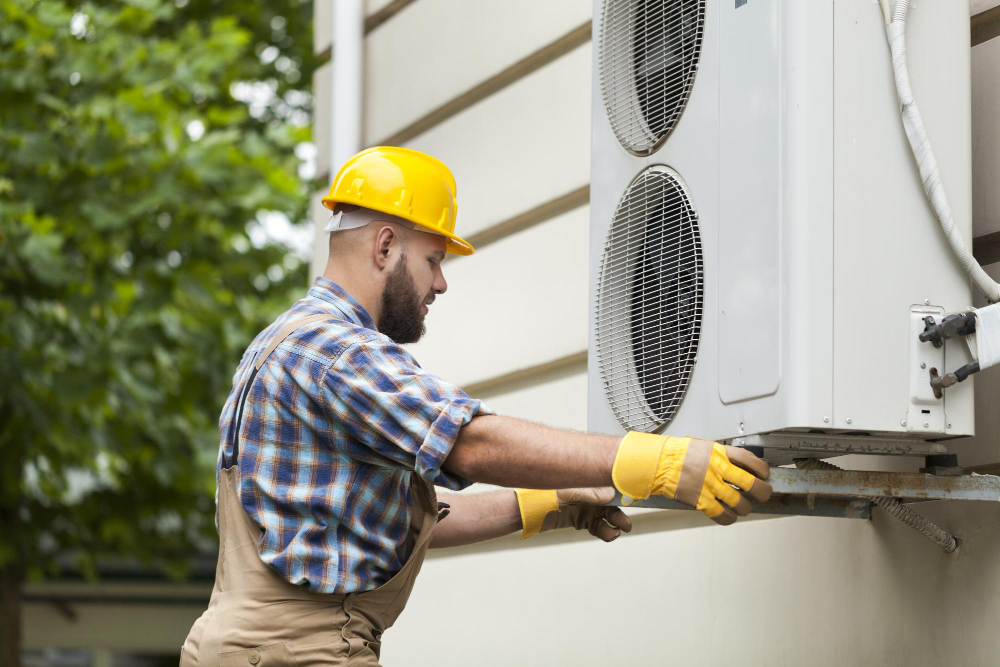
Every air conditioner has a finish line. If your system has been cooling your Cumming home for a decade or longer, you have probably started wondering whether that next repair bill is worth it or whether the money would go further toward a brand new unit. It is a fair question, and one that more homeowners in the Cumming and Windermere area are asking as summers get longer and energy costs keep climbing.
Knowing when to replace your air conditioner in Cumming starts with paying attention to the signals your system is already sending you. Rising utility bills, uneven temperatures from room to room, and repair invoices that keep stacking up are not just inconveniences. They are your AC telling you it is running out of road.
The U.S. Energy Information Administration reports that heating and cooling account for roughly 52% of a typical household's annual energy consumption, which means even a modest efficiency drop in your air conditioner can show up quickly on your Georgia Power statement.
The good news is that replacing an aging system is not just a cost. It is also an investment that pays you back in lower bills, better humidity control, and a home that actually feels comfortable in every room.
This article walks you through the real-world signs that replacement makes more sense than another repair, the efficiency standards that have changed since your current system was installed, and what Cumming and Windermere homeowners should look for when choosing a new unit.
In this article, you will learn about:
Keep reading to find out exactly when holding onto your current system stops saving you money and starts costing you more.
Most homeowners assume their air conditioner will last forever as long as they keep fixing it. That is not how it works. Every system has a finite number of cooling seasons, and where you live has a direct impact on how quickly those seasons add up.
The U.S. Department of Energy's Building America program uses a 15-year average product lifetime for central air conditioners in its cost-benefit analyses for federal efficiency regulations. That number comes from national data, though, and it averages homes in Minnesota that barely run their AC with homes in Georgia that rely on cooling for six months or more every year. In a market like Cumming, where temperatures regularly push into the low and mid 90s from May through September, your compressor logs significantly more runtime than the national average.
Your compressor is the most expensive single component in the system. Every hour it runs, it generates heat, vibration, and wear on internal bearings and valves. In northern states, a compressor might run 600 to 800 hours in an entire cooling season. In metro Atlanta, that number can easily double or triple depending on your thermostat setting and how well your home is insulated.
That extra runtime matters. Electrical contacts degrade faster. Refrigerant pressures cycle more often. Capacitors, which help the compressor and fan motors start, typically fail every few years in hot climates rather than lasting the life of the unit. If you have already replaced a capacitor or a contactor more than once, your system is telling you it is deep into its second act.
The practical takeaway for Cumming homeowners is that 12 to 15 years is a realistic working life for a well-maintained central AC in this climate. Some systems make it to 18 or 20 with diligent preventative maintenance, but by that point, efficiency has dropped noticeably even if the unit still turns on.
Two identical units installed on the same street in Windermere can have completely different lifespans. The difference almost always comes down to maintenance. A system that gets a professional tune-up every spring will hold its rated efficiency much longer than one that only sees a technician when something breaks. Staying on top of filter changes between service visits makes a measurable difference as well.
If you bought your home and inherited the AC with no maintenance records, treat the system with extra caution once it hits the 10-year mark. There is no way to know how well the previous owner cared for it, and deferred maintenance accelerates every form of wear.
A system with full maintenance records and fewer than two major repairs is a reasonable candidate to keep running past 15 years. A system with spotty records, multiple refrigerant charges, or a compressor that has already been replaced once is almost always better off being retired.
Atlanta's climate is not just hot. It is humid. Your air conditioner is doing double duty all summer, removing heat and pulling moisture out of the air simultaneously. That moisture passes over the evaporator coil and drains out through the condensate line, but it also creates the conditions for corrosion, algae buildup in the drain pan, and added load on the blower motor.
Over time, coils corrode, drain lines clog more frequently, and the system has to work harder to dehumidify your home. If you notice your house feels clammy even when the AC is running, or if you are seeing condensation around vents or on windows, the system is struggling with the moisture load. That is a sign it has lost capacity, and capacity does not come back with a repair.
Some failures are obvious. The system stops blowing cold air, or it will not turn on at all. But most air conditioners do not fail all at once. They decline slowly, and the signs can be easy to dismiss as normal aging if you are not looking for them. Catching these signals early gives you time to prevent a summer breakdown on your schedule rather than scrambling during a July heatwave.
The ENERGY STAR program recommends having your HVAC equipment evaluated by a professional if it is more than 10 years old or not keeping your house comfortable. A professional cleaning and inspection is the single best way to know where your system stands, but there are warning signs you can watch for on your own before you make that call.
Pull up your Georgia Power bills from the last two or three summers and compare them month by month. If your July bill was $180 three years ago and it is $240 this year without a rate increase that explains the jump, your air conditioner is almost certainly losing efficiency. Systems lose cooling capacity gradually as components wear, and the unit compensates by running longer cycles. Longer cycles mean more kilowatt-hours, and more kilowatt-hours mean a higher bill.
This is one of the sneakiest signs because the increase happens slowly. You adjust to each new bill, and it never feels dramatic in any single month. But over three to five years, the cumulative cost of running an inefficient system can rival the down payment on a new one. The average Georgia Power residential customer was paying about $189 per month in summer 2025, according to the Georgia Public Service Commission. If your bills are consistently running well above that benchmark without an unusual usage pattern, your AC deserves a hard look.
Keep in mind that Georgia Power's summer rates are tiered, so homes that consume more electricity in the June through September peak period pay a higher per-kilowatt-hour rate on usage above a certain threshold. An aging, inefficient AC pushes you into those higher tiers faster.
One repair a year on an older system is not unusual. A new capacitor here, a contactor there. But when repairs start stacking up, two or three in the same season, or when a single repair estimate crosses the $1,000 mark, the math changes.
A useful rule of thumb is to multiply the cost of the repair by the age of the system. If that number exceeds the cost of a new unit, replacement is the better financial move. For example, a $900 repair on a 14-year-old system gives you $12,600, which is well into new-unit territory. You are paying to extend a system that is already past its expected lifespan.
Here are the repairs that signal a system is near the end:
Each of these individually is fixable. But when they cluster together on a system that is already 12 or more years old, the pattern is clear. The unit is wearing out systemically, not just in one spot.
If your living room is 72 degrees but the upstairs bedroom is 78, your system is not distributing air effectively. This can be a ductwork issue, but on an older system, it often means the unit has lost enough capacity that it can no longer cool the full square footage of the home.
Humidity is the other telltale. A properly sized and functioning AC in metro Atlanta should keep indoor humidity between roughly 40% and 55%. If your home feels sticky even with the system running, the evaporator coil is likely not pulling enough moisture. This is uncomfortable, but it also creates conditions for musty odors and deterioration of wood trim, flooring, and drywall.
When these comfort problems show up alongside rising bills and more frequent repairs, you have a complete picture. The system is done doing its job well, and no single repair is going to bring it back.
A healthy air conditioner hums. An aging one bangs, rattles, squeals, or buzzes. These sounds come from worn bearings, loose mounting hardware, failing fan blades, and compressors that are struggling to start. Pay particular attention to a hard, clunking sound at startup, which often indicates the compressor is having trouble engaging and may require air conditioning repair sooner than you expect.
Short cycling, where the system turns on, runs for a few minutes, shuts off, and then restarts shortly after, is another common AC problem. It can be caused by an oversized unit, a failing thermostat, or a refrigerant issue, but on an older system it frequently means the compressor is overheating and tripping its internal safety switch. Short cycling dramatically increases wear on every component and drives your energy bills up at the same time.
If your current air conditioner was installed before 2015, it was built to meet efficiency standards that are now outdated. And if it was installed before 2006, the gap between what it uses and what a modern system would use is even wider. Understanding what has changed helps you see the full financial picture when you are weighing repair against replacement.
The efficiency conversation is not just academic. It directly affects how much you pay Georgia Power every month and how comfortable your home feels during a Cumming summer.
SEER stands for Seasonal Energy Efficiency Ratio. It measures how much cooling output a system delivers per unit of electricity consumed over a full cooling season. The higher the number, the less electricity the system needs to produce the same amount of cooling.
In January 2023, the U.S. Department of Energy introduced a new testing standard called SEER2, which uses higher static pressure during testing to better simulate real-world duct conditions. The Air-Conditioning, Heating, and Refrigeration Institute notes that the shift from SEER to SEER2 means efficiency requirements effectively increased by about 7%, even though the numerical rating only went up by roughly one point. For the Southeast region, which includes Georgia, the current federal minimum for a split-system air conditioner is 15 SEER or 14.3 SEER2.
If your system is rated at 10 SEER, which was common on units installed in the early 2000s, a new 16 SEER2 system would use roughly 40% less electricity to produce the same cooling. That is not a small number. On a home that spends $150 a month on cooling from June through September, the savings from a higher-efficiency unit can reach $60 or more per month during peak summer.
Efficiency ratings only tell part of the story. A system that was rated at 13 SEER when it was new does not stay at 13 SEER forever. Dirty coils, worn components, duct leaks, and low refrigerant all chip away at real-world performance. By the time a 13 SEER system is 12 or 15 years old, it may be operating closer to 9 or 10 SEER in practice, even if it still runs.
According to the ENERGY STAR program, replacing old heating and cooling equipment with certified models can cut annual energy bills by nearly $140 on average nationally. In a hot climate like metro Atlanta, where cooling accounts for a larger share of annual energy use, the savings potential is higher. And improper installation can reduce system efficiency by up to 30%, so making sure the new unit is installed correctly matters just as much as the equipment rating itself.
Here is what that looks like over time:
That math is why HVAC professionals in metro Atlanta consistently recommend replacing rather than continuing to repair systems that are past the 15-year mark.
Not every new air conditioner is created equal, even within the same efficiency tier. ENERGY STAR certification means the system has been independently tested and verified to exceed the federal minimum efficiency standards. For central air conditioners, that typically means a SEER2 rating of 15.2 or higher for split systems in the Southeast.
ENERGY STAR-certified heat pumps are more than 15% more efficient than standard models, and certified central air conditioners deliver measurable savings over baseline equipment. Combined with a smart thermostat and properly sealed ductwork, a certified system gives you the best return on every dollar you spend on cooling.
If your air conditioner was manufactured before 2010, there is a strong chance it uses R-22 refrigerant, also known by the brand name Freon. This matters because R-22 is no longer being produced or imported into the United States, and that changes the economics of keeping an older system alive.
The phaseout is not a suggestion. It is a federal regulation driven by the environmental damage R-22 causes to the ozone layer, and it has been tightening for over a decade.
The U.S. Environmental Protection Agency banned the production and import of R-22 as of January 1, 2020, under the Clean Air Act's phaseout of ozone-depleting substances. The only R-22 still available comes from recycled or stockpiled supplies, and those supplies are shrinking every year as more older systems are retired.
You can still legally use R-22 in your existing air conditioner. The EPA does not require homeowners to replace equipment just because it uses this refrigerant. But servicing that equipment, especially if it develops a leak and needs a refrigerant recharge, is becoming significantly more expensive because the supply is limited and the price reflects it.
A single R-22 recharge that might have cost $150 a decade ago can now run $400 to $600 or more depending on how much refrigerant your system needs and what the current market price is in your area. That is a lot of money to put into a system that may only have a year or two of useful life left.
The easiest way to find out is to look at the data plate on your outdoor condensing unit. It is a metal label, usually on the side or back panel, that lists the model number, serial number, and the type of refrigerant the system was designed to use. If it says R-22, HCFC-22, or Freon 22, your system uses the phased-out refrigerant.
Systems manufactured after 2010 almost universally use R-410A or a newer alternative. R-410A does not deplete the ozone layer and is readily available at normal market prices. If your system already uses R-410A, the refrigerant phaseout is not an immediate concern for you, but your system's age and overall condition still matter.
A small refrigerant leak on a 5-year-old R-410A system is a straightforward repair. Find the leak, fix it, recharge the system, and move on. A refrigerant leak on a 15-year-old R-22 system is a completely different calculation.
First, R-22 itself is expensive because supply is limited. Second, finding and repairing the leak on aged copper lines or a corroded evaporator coil is not always possible without replacing the component that is leaking. Third, even after the repair, you are still running a system that is past its expected lifespan with a refrigerant that will only get harder and more expensive to source.
For most Cumming homeowners in this situation, the repair cost plus the R-22 recharge cost together push past the threshold where replacement makes more financial sense. This is especially true if the system has any of the other warning signs, like rising bills or frequent repairs, stacking up alongside the refrigerant issue.
Once you have decided that replacement is the right move, the next question is how to do it without overspending or ending up with the wrong system. Planning ahead, even if your current unit is still running, puts you in a much stronger position than waiting until it fails on the hottest day of the year.
Emergency replacements cost more, take longer to schedule, and leave you with fewer choices because you are in a hurry. A planned replacement lets you compare options, get multiple evaluations, and schedule the work during a slower season when contractors have more availability.
Oversizing is one of the most common mistakes in residential AC replacement, and it causes real problems. An oversized system cools the air quickly but shuts off before it has run long enough to remove humidity. The result is a home that hits the thermostat temperature but still feels clammy and uncomfortable. It also causes short cycling, which increases wear and shortens the life of the new system.
Undersizing is the opposite problem. The system runs continuously but never catches up, especially on peak summer afternoons. Your bills go up, the compressor wears out faster, and you are never quite comfortable.
A proper installation starts with a load calculation, not just matching the tonnage of the old unit. A load calculation accounts for your home's square footage, insulation levels, window count and orientation, ceiling height, ductwork condition, and the local climate data for Cumming. If a contractor quotes you a system without doing one, that is a red flag.
You do not need to become an HVAC engineer to make a good buying decision. Focus on a few key factors and let your contractor handle the technical details.
Here are the features that matter most for Cumming homeowners:
Variable-speed systems cost more upfront, but they excel at humidity control because they run longer at lower output. In a humid climate like metro Atlanta, that difference is noticeable in daily comfort and in your electricity usage.
Beyond the equipment, pay attention to who is installing it. A great unit installed poorly will underperform. Ask about the contractor's process for load calculations, duct evaluation, and post-installation performance verification. B. Tucker Heating and Air, for instance, focuses on right-sizing, duct performance, and commissioning checks to make sure the system is delivering what it should from day one.
Late fall and early winter are typically the best times to replace an air conditioner in metro Atlanta, and scheduling a fall tune-up on your current system gives you a clear picture of whether it can make it through one more season. Contractors are less booked than during the summer rush, lead times for equipment are shorter, and you may have access to end-of-season pricing or manufacturer rebates that are not available in June or July.
If your current system is limping along and you suspect it will not make it through another full summer, the worst time to replace it is in the middle of July when every HVAC company in the area is running a two-week backlog. Plan ahead, get your evaluation done in the spring or fall, and schedule the installation before the season you need it most.
You should also check whether your utility or the federal government is offering any rebates or tax credits for high-efficiency equipment. Federal tax credits under the Inflation Reduction Act cover a portion of the cost for qualifying heat pumps and central air conditioners, and Georgia Power occasionally runs rebate programs for ENERGY STAR-certified equipment. These incentives can take a meaningful bite out of the upfront cost.
Replacing the outdoor and indoor units without evaluating the ductwork is like putting a new engine in a car with flat tires. Your ducts are the delivery system, and if they are leaking, undersized, or poorly insulated, even a top-of-the-line AC will underperform.
According to the U.S. Department of Energy, sealing and insulating ducts can improve the efficiency of a heating and cooling system by as much as 20%. That is a significant number. If your ducts run through an unconditioned attic or crawlspace, which is common in Cumming homes, the temperature differential between the duct surface and the surrounding air can cause substantial energy loss before the cooled air ever reaches your vents.
Ask your contractor to inspect the ductwork as part of the replacement process. Sealing leaks with mastic, insulating exposed runs, and verifying that the duct system is properly sized for the new equipment can make the difference between a system that performs as advertised and one that leaves you wondering why your bills did not drop as much as you expected.
A thorough duct evaluation also catches issues like disconnected joints, crushed flex duct, and poor ventilation that can starve the new system of airflow. Addressing these issues during installation costs a fraction of what they would cost to fix as a separate service call later.
Replacing your air conditioner is not a decision you have to make overnight, and it should not catch you off guard. The signs are usually there well before the system fails completely. Rising energy bills, stacking repair costs, rooms that never feel comfortable, and a refrigerant your system can no longer get affordably are all signals that the math has shifted from repair to replacement.
For homeowners in Cumming and the Windermere area, the combination of long cooling seasons, high humidity, and Georgia's summer heat means your air conditioner works harder than most. That is exactly why planning ahead matters. Getting an honest evaluation of your current system, understanding what today's efficiency standards offer, and choosing a properly sized replacement installed by a contractor who takes the time to do it right are the steps that protect your comfort and your budget for the next 15 years.
If your system is approaching the end of its useful life, or if you are seeing the warning signs we covered in this article, now is the time to have the conversation. Contact B. Tucker Heating and Air to schedule an evaluation and find out where your system stands.


