
Open : 9:00am to 5:00pm weekdays


Office Address
4025 Pleasantdale Rd, Suite 250 Atlanta, GA 30340

Phone Number
404-298-1314

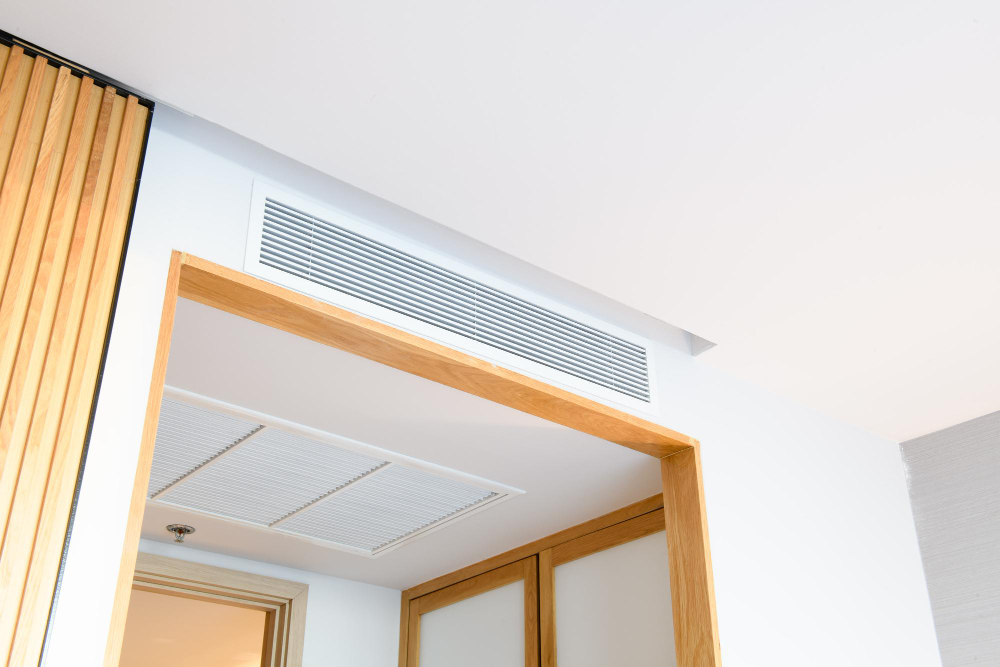
If you have ever walked into a room that felt stuffy even though the AC was running full blast, ventilation is usually the missing piece. Understanding how ventilation improves indoor comfort in Peachtree Corners starts with a simple fact: temperature control and air quality are two different jobs, and most HVAC systems only handle the first one. Your air conditioner cools the air that is already inside, but it does very little to replace that air with something fresher or cleaner.
Peachtree Corners sits in Gwinnett County's humid subtropical climate, where summer highs regularly push past 87 degrees and the air outside is loaded with moisture for months at a stretch.
That combination means homes here stay sealed tight for long stretches of the year, and without a deliberate way to cycle stale air out and fresh air in, pollutants, moisture, and odors quietly build up indoors. The result is a house that might be the right temperature but still feels uncomfortable to live in.
Whether your home was built in the 1980s or finished last year, ventilation services play a bigger role in day-to-day comfort than most homeowners realize, and the options available today go well beyond opening a window.
In this article, you will learn about:
Keep reading to find out how the right ventilation approach can make every room in your home feel cleaner, drier, and more comfortable regardless of the season.
Most people assume that if air is moving through a room, the ventilation is fine. That is not quite how it works. True ventilation means exchanging indoor air for outdoor air at a controlled rate, not just pushing the same stale air in circles. Your ceiling fans and your HVAC blower are great at circulation, but neither one introduces fresh air into the house on its own.
Air circulation moves existing indoor air around. Your HVAC system pushes conditioned air through supply ducts and pulls it back through returns, but that loop is closed. The same air gets filtered, cooled or heated, and sent back out. Ventilation, on the other hand, is the deliberate introduction of outdoor air to dilute and displace the pollutants, moisture, and gases that build up indoors over time.
The American Society of Heating, Refrigerating and Air-Conditioning Engineers (ASHRAE) recommends that residential homes receive at least 0.35 air changes per hour, which means roughly a third of the air inside your house should be replaced with fresh outdoor air every sixty minutes. Most homes in the Atlanta suburbs fall well short of that benchmark without mechanical ventilation in place.
Modern building practices prioritize energy efficiency, and that means tighter construction. Homes built or renovated in the past two decades in neighborhoods across Peachtree Corners tend to have fewer gaps around windows, doors, and framing, and better insulation overall. That is good for keeping your energy bills lower, but it also means less natural air infiltration.
In older homes, air leaked in through cracks and gaps fast enough to provide some passive ventilation. In a tightly sealed house, that exchange slows to a trickle. Without mechanical help, contaminants from cooking, cleaning products, building materials, and even the people living inside the home have nowhere to go. They accumulate in the air you breathe every day.
Ventilation reduces indoor pollutant concentrations by diluting them with cleaner outdoor air and exhausting contaminated air out. According to the EPA, inadequate ventilation can increase indoor pollutant levels by failing to bring in enough outdoor air to dilute emissions from indoor sources and by failing to carry those pollutants out of the home. This is not about making your home smell better, although that happens too. It is about lowering the concentration of irritants, allergens, and chemicals that can affect how you feel day after day.
The three main ways ventilation protects your indoor environment are:
Without at least one of these mechanisms working consistently, your home is essentially recirculating the same air with a slowly rising pollutant load.
This is the part that surprises most homeowners. People tend to associate air pollution with traffic, factories, and the outdoors, not with their living room. But the research consistently shows the opposite pattern, and it is especially relevant in a climate like metro Atlanta's where homes stay buttoned up for months.
Volatile organic compounds (VOCs) are gases released by thousands of everyday household products, and you are almost certainly surrounded by them right now. The EPA notes that indoor concentrations of many VOCs are consistently higher than outdoor levels, sometimes up to ten times higher, regardless of whether the home is in a rural or industrial area. Common sources include:
These products release VOCs during use and, to a lesser degree, while they are stored. Without adequate ventilation to exhaust those gases, they linger and accumulate in your indoor air.
Peachtree Corners shares the same humid subtropical climate as the rest of metro Atlanta, and that humidity does not stop at your front door. When indoor humidity rises above the 50 percent mark, the conditions become favorable for dust mite reproduction, mold spore growth, and bacteria proliferation. The EPA recommends keeping indoor relative humidity between 30 and 50 percent, and in a Georgia summer, hitting that target without help from your ventilation system is difficult.
Meanwhile, the EPA's Report on the Environment states that Americans spend approximately 90 percent of their time indoors, where concentrations of some pollutants are often two to five times higher than typical outdoor levels. In a home where ventilation is limited to running the AC and occasionally opening a door, those numbers add up quickly, especially during the hottest and most humid months when windows stay shut.
Your air conditioner does remove some humidity as a byproduct of cooling, but it is designed primarily to control temperature. On a muggy July afternoon in Peachtree Corners, the system may not run long enough cooling cycles to pull sufficient moisture from the air, or it may short-cycle and leave humidity levels higher than they should be. A system that is oversized for the home is particularly prone to this problem because it cools the space quickly and shuts off before it can adequately dehumidify.
Filtration helps with particulates, but standard HVAC filters do not remove gases, VOCs, or excess moisture. Ventilation is the mechanism that addresses what filtration and cooling alone cannot.
Not every home needs the same ventilation setup. The right choice depends on your climate, how tightly your home is built, and what problems you are trying to solve. The U.S. Department of Energy identifies four basic types of mechanical whole-house ventilation systems, and each one works a little differently.
An exhaust system uses fans to pull stale air out of the home, typically from bathrooms and the kitchen, and relies on natural air infiltration through gaps and cracks to replace it. These systems are simple and inexpensive, but they create negative pressure inside the house, which can pull unconditioned, unfiltered air in from crawlspaces, attics, and garages.
That makes exhaust-only systems a poor fit for Peachtree Corners. In a hot, humid climate, negative pressure means drawing in warm, moisture-laden air through every gap in the building envelope. The result is higher humidity indoors, more strain on your cooling system, and potentially pulling in contaminants from spaces you do not want air coming from.
Supply ventilation does the opposite. A fan pushes outdoor air into the home, creating slight positive pressure that forces stale air out through gaps and exhaust points. Because the incoming air passes through a single intake point, it can be filtered and even partially dehumidified before entering the living space.
This approach works better in warm climates because the positive pressure prevents uncontrolled infiltration of humid outdoor air. However, a standalone supply system does not recover any energy from the outgoing air, which means your HVAC system has to condition all of that incoming air from scratch.
A balanced ventilation system uses two separate airstreams, one bringing fresh air in and one exhausting stale air out, at roughly equal rates. This keeps the home at neutral pressure and gives you control over both the intake and the exhaust. The tradeoff is higher installation cost and complexity compared to exhaust-only or supply-only systems.
An energy recovery ventilator (ERV) takes the balanced concept further by passing the incoming and outgoing air through a heat exchanger. According to the U.S. Department of Energy, most energy recovery ventilation systems can recover 70 to 80 percent of the energy in the exiting air and transfer it to the incoming stream.
In a Peachtree Corners summer, that means the ERV pre-cools and dehumidifies the fresh outdoor air before it reaches your HVAC system, reducing the workload on your AC considerably. In winter, it recovers heat from the outgoing air and warms the incoming air before it enters the system.
For homes in the Atlanta metro area, an ERV is typically the strongest option because it handles both heat and moisture transfer. A heat recovery ventilator (HRV) only transfers heat and does not manage humidity, which makes it better suited for dry or cold climates rather than Georgia's subtropical conditions.
If you have lived in Peachtree Corners through even one summer, you already know that humidity is the real comfort challenge here. Temperature is straightforward, you set the thermostat and the AC handles it. Humidity is sneakier, and it is the reason two homes at the same thermostat setting can feel completely different.
The EPA's recommendation of 30 to 50 percent indoor relative humidity sounds like a simple target, but in a climate where outdoor humidity in the Atlanta area regularly exceeds 70 percent during summer mornings, it takes real effort to stay inside that window. A well-designed ventilation system helps by controlling how much outdoor moisture enters the home and by exhausting moisture generated indoors from showers, cooking, and even breathing.
When indoor humidity consistently stays above 55 to 60 percent, you may start noticing:
Each of these is a signal that humidity has outpaced your current system's ability to manage it.
Even a properly sized, well-maintained air conditioning system has limits when it comes to dehumidification. Your AC pulls moisture from the air as it passes over the evaporator coil, but the amount it removes depends on run time, system sizing, and the temperature differential between the coil and the air. On a mild but humid spring day, the system may not need to run much for cooling, which means it is not pulling nearly enough moisture out of the air either.
This is where supplemental ventilation and dedicated dehumidification earn their place. An ERV paired with your existing HVAC system addresses both fresh air delivery and humidity control simultaneously, and it does so without forcing your AC to work overtime. For homes that struggle with persistent dampness despite regular HVAC maintenance, adding mechanical ventilation is often the most effective next step.
Most Peachtree Corners homeowners think about humidity as a summer problem, and while summer is certainly the peak, it is not the only season where ventilation matters. Georgia's mild winters bring their own challenges. Heating systems dry out indoor air, and without a ventilation strategy that accounts for winter conditions, you can swing from too much moisture in July to cracked skin, static electricity, and irritated sinuses by January.
Spring and fall introduce their own complications. Pollen counts in the Atlanta metro area are some of the highest in the country during spring, and simply opening windows for fresh air means inviting those allergens directly into your home. A mechanical ventilation system with proper filtration gives you the fresh air exchange without the pollen tradeoff.
You do not always need a diagnostic tool or a professional assessment to recognize a ventilation problem. Many of the symptoms show up in ways you can see, smell, or feel. The tricky part is that homeowners often attribute these issues to their AC, their insulation, or even the age of the house, when the real culprit is inadequate fresh air exchange.
A room that feels stuffy or stale even when the AC is running is one of the most common signs of poor ventilation. Cooking odors that linger for hours after dinner, a musty closet that never smells fresh, or a bathroom that stays humid long after you have finished showering all point to insufficient air turnover.
The pattern is usually worse in interior rooms with no exterior walls, because those spaces rely entirely on the HVAC system for air movement and have no natural infiltration at all.
When you see moisture beading on the inside of your windows, especially in the mornings, that is warm, humid indoor air meeting a cooler surface and releasing its moisture. Occasional condensation during a cold snap is normal, but regular condensation on windows, pipes, or toilet tanks during mild weather suggests your indoor humidity is too high and your ventilation is not keeping up.
Left unchecked, condensation leads to:
Ventilation problems and duct performance problems often overlap. According to ENERGY STAR, a typical home loses about 20 to 30 percent of the air moving through the duct system due to leaks, holes, and poorly connected ducts. When conditioned air escapes into your attic or crawlspace instead of reaching the rooms you live in, the result is uneven temperatures, longer run times, and higher energy bills.
If some rooms in your home are consistently warmer or cooler than others, or if your utility bills have been climbing without a clear explanation, duct leakage may be part of the problem. Addressing duct integrity is a key step in making any ventilation strategy work effectively, because even the best ERV cannot compensate for a duct system that is leaking conditioned air into unconditioned spaces.
Installing a ventilation system is only half the equation. Like every other component of your HVAC setup, ventilation equipment needs regular attention to keep performing. Neglected systems lose efficiency gradually, and by the time you notice the symptoms, the air quality and comfort problems have usually been building for months.
Every ventilation system that introduces outdoor air uses some form of filtration to keep dust, pollen, and debris out of your living space. Those filters need regular replacement, typically every one to three months depending on the type and on local air quality conditions. In Peachtree Corners, where pollen season runs hard from March through May, checking filters monthly during spring is a good practice.
Ductwork should be inspected at least once a year. Damaged, disconnected, or poorly sealed ducts compromise both your ventilation and your cooling performance. A professional HVAC cleaning and inspection catches problems like:
A comprehensive HVAC tune-up should include the ventilation components, not just the heating and cooling equipment. When a technician inspects your system, the ventilation portion typically involves checking fan operation and airflow rates, verifying that dampers open and close correctly, testing the heat exchanger core in an ERV or HRV for efficiency, and confirming that fresh air intake points are unobstructed.
Scheduling this work twice a year, once before summer and once before winter, keeps your system tuned for the demands of each season. A preventative maintenance agreement that covers both HVAC and ventilation ensures nothing falls through the cracks and gives a technician the chance to catch small issues before they become expensive repairs.
Your ductwork is the delivery network for everything your HVAC and ventilation systems produce, and its condition directly determines how well that air reaches the rooms where you live. Leaky ducts do not just waste energy. They also compromise ventilation by allowing unconditioned, unfiltered air to enter the system from attics, crawlspaces, and wall cavities. That air may carry dust, insulation fibers, allergens, and moisture that your filtration system never gets a chance to catch.
If you have recently upgraded your HVAC equipment or added ventilation but are not seeing the comfort improvement you expected, duct integrity is the first thing worth investigating. Sealing and insulating accessible ductwork is one of the highest-return improvements you can make, because it amplifies the performance of every other component in the system.
For homes with aging or undersized ductwork, a professional diagnostic assessment can identify exactly where the losses are happening and what it takes to fix them.
Ventilation is not the kind of upgrade you notice by looking at your house. There is no new appliance on the counter or shiny fixture on the wall. But you feel it the moment you walk in the door, cleaner air, less stuffiness, consistent comfort in every room, and the kind of indoor environment where you actually want to spend time.
For homeowners in Peachtree Corners and across the Atlanta metro area, getting ventilation right means working with a team that understands how humidity, duct performance, and system design all connect. It means honest recommendations that start with what your home actually needs rather than what is easiest to sell.
B. Tucker Heating and Air has been helping metro Atlanta homeowners with exactly these kinds of decisions for over 40 years. If your home feels stuffy, your energy bills are climbing, or you are just ready to breathe easier indoors, reach out to the team at B. Tucker Heating and Air and let them take a look at what your home needs.


