
Open : 9:00am to 5:00pm weekdays


Office Address
4025 Pleasantdale Rd, Suite 250 Atlanta, GA 30340

Phone Number
404-298-1314

Heating problems do not always start with a total shutdown. Most failures give warning signs weeks or even months ahead. Knowing what to listen for and what to watch can be the difference between a simple repair and a system that goes down on the coldest night of the year.
Below are the systems we repair and the most common signals that something needs attention.
Gas furnaces are the most common heating system in metro Atlanta. The problems we see most often include failed igniters, dirty flame sensors that cause the system to shut down mid-cycle, cracked heat exchangers, worn blower motors, and faulty gas valves. If your furnace is short-cycling, blowing lukewarm air, making unusual noises, or not turning on at all, those are all signals that something in the system needs diagnosis.
Heat pumps in heating mode rely on the reversing valve, the defrost cycle, and the outdoor unit to pull heat from the outside air. When any of those components falter, the system either stops heating or drops to auxiliary heat strips, which are expensive to run. Common heat pump heating issues include frozen outdoor coils, a stuck reversing valve, low refrigerant charge, and faulty defrost controls.
Electric furnaces and auxiliary heat strips are simpler mechanically than gas systems, but they draw heavy electrical loads. Sequencer failures, burned-out heating elements, and tripped breakers are the most common problems. If your electric heat runs but the house never reaches temperature, or if your breaker keeps tripping when the heat kicks on, the system needs professional diagnosis.
Sometimes the problem is not the furnace at all. A miscalibrated thermostat, a dead battery, a tripped float switch, or a faulty control board can all make it look like the heating system has failed when the equipment itself is fine. We check the controls first to rule out the simplest explanations before moving to the equipment.
A furnace can produce plenty of heat and still leave rooms cold if the ductwork is leaking, disconnected, or improperly sized. The U.S. Department of Energy notes that duct losses in unconditioned spaces can account for significant energy waste. If some rooms heat well and others do not, or if you feel warm air coming from places it should not, the ducts may be part of the problem.
A cracked heat exchanger, a blocked exhaust flue, or a backdrafting furnace can introduce carbon monoxide into your home. The U.S. Consumer Product Safety Commission reports that more than 200 people in the United States die each year from carbon monoxide produced by consumer products, including malfunctioning furnaces. If your CO detector goes off, if you smell gas, or if family members experience headaches and nausea during heating season, shut the system down and call for service immediately.
Heating repair comes down to trust. You need someone who will tell you what is actually wrong, fix it at a fair price, and stand behind the work. We have been doing this for over 40 years in metro Atlanta, and our reputation is built on getting the diagnosis right the first time.
What you get with B. Tucker:
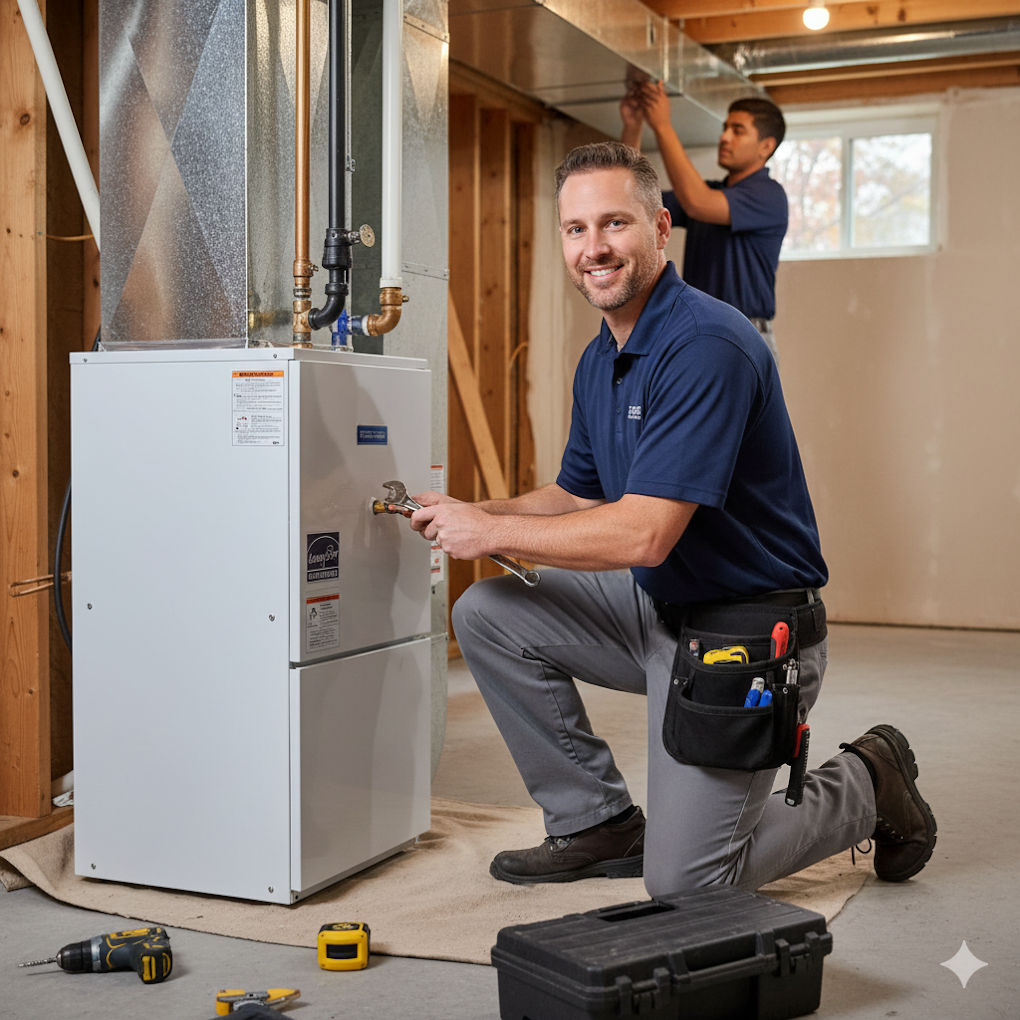
Heating repair is one part of what we do. Below are the rest of our HVAC services across metro Atlanta. Click through to the page that matches what you need.
Furnace or heat pump replacement with same-week scheduling in most cases.
Annual tune-ups that keep your system efficient and your warranty intact.
New furnace, heat pump, or hybrid system installs for new construction and full system swaps.
You are here.
Replace your aging AC unit with an energy-efficient system sized right for your home.
Spring tune-ups that catch issues before the first 90-degree week.
Diagnosis and repair when a working system stops working right.
New AC installs for additions, remodels, and homes without existing central cooling.
HVAC service for small offices, retail spaces, and light commercial buildings.
Installation of rooftop units and split systems for light commercial properties.
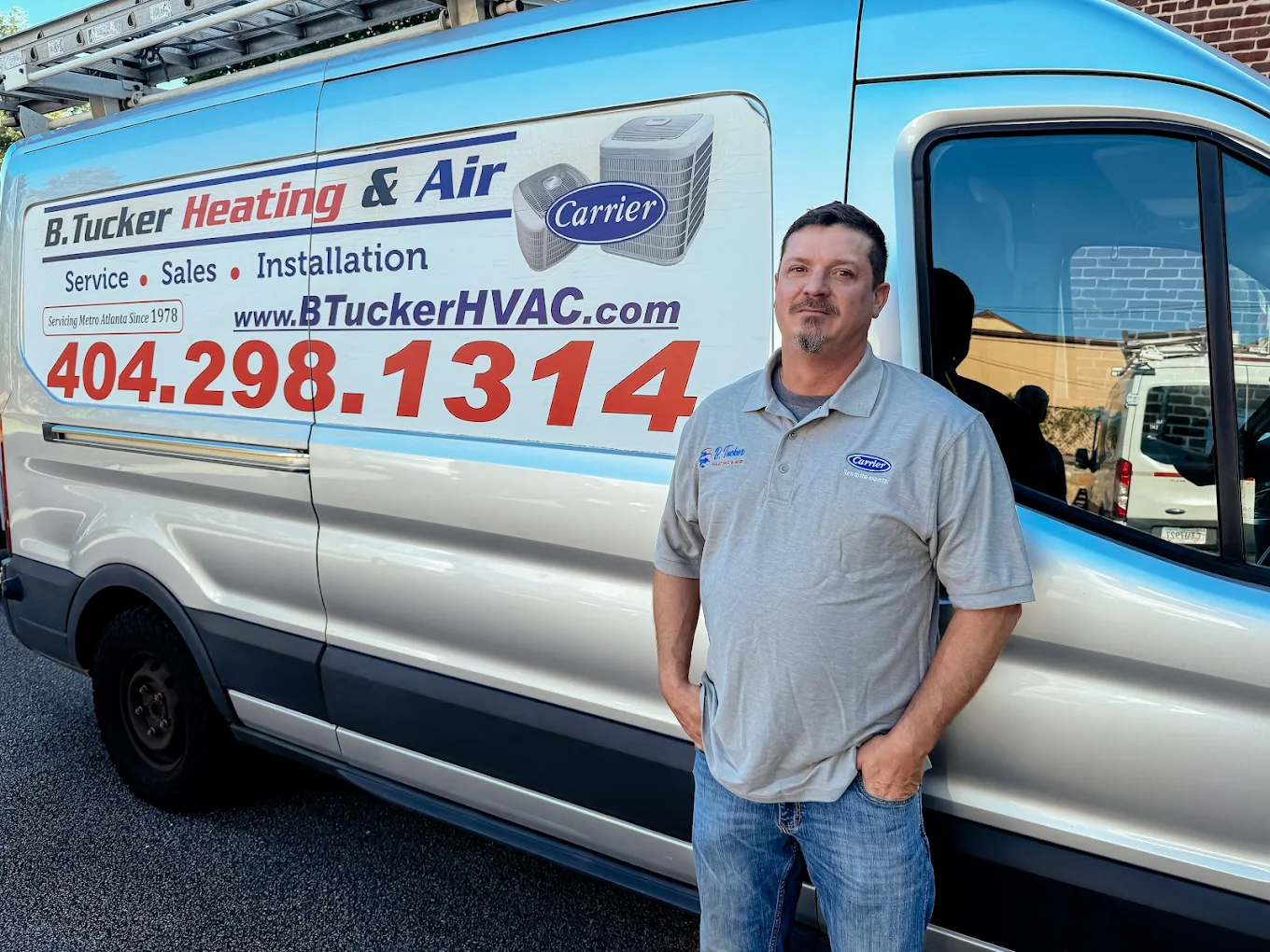
We do not start swapping parts the moment we walk in. Every repair starts with a proper diagnosis. Here is how a B. Tucker heating repair works.
A technician arrives, listens to your description of the issue, then works through a systematic diagnostic. We check the thermostat, the controls, the electrical connections, the gas supply (for gas furnaces), and the mechanical components in a logical order. The goal is to identify the root cause, not just the symptom.
Once we identify the problem, we explain what is wrong, why it happened, and what it will cost to fix. If the repair does not make financial sense given the age or condition of the system, we will tell you that too. You approve the work and the price before we start.
We complete the repair, then test the full system to confirm the fix holds. We check the system output, cycle it on and off, verify thermostat communication, and make sure everything is running the way it should before we leave.

The most common causes are a failed igniter or flame sensor (the furnace tries to light but shuts down), a tripped limit switch from overheating (often caused by a clogged filter), or a faulty gas valve. A technician can usually diagnose the issue within the first 15 to 20 minutes of the visit.
Short-cycling means the furnace turns on, runs for a few minutes, shuts off, and repeats. Common causes include an oversized furnace, a clogged filter restricting airflow, a malfunctioning flame sensor, or a thermostat placed too close to a heat source. The root cause needs to be identified because short-cycling stresses the equipment and raises energy bills.
A good rule of thumb is to weigh the repair cost against the age of the system. If the furnace is over 15 years old and the repair is significant, replacement often makes more financial sense. We will give you an honest recommendation based on the specific situation rather than a blanket answer.
We offer same-day appointments for heating repair calls in metro Atlanta when available. If your heat is out, let us know when you call and we will prioritize getting a technician to your home as quickly as possible.
Repair costs depend on the specific problem. A flame sensor or igniter replacement is on the lower end. A blower motor or control board replacement costs more. We provide upfront pricing after the diagnosis so you know the cost before any work starts.
Yes. Our technicians service Carrier, Lennox, Rheem, Ruud, Trane, and every other major residential brand. We carry common parts on our trucks so many repairs can be completed in one visit.
It depends on the noise. A loud bang at startup can indicate delayed ignition, which is a safety concern. A high-pitched squeal usually points to a blower motor or belt issue. Persistent rattling may be a loose component. If you hear banging, smell gas, or your CO detector goes off, turn the system off and call immediately.
If your heating system is not working right, making unusual noises, or not keeping your home comfortable, do not wait for it to fail completely. We will diagnose the real problem, give you an honest recommendation, and get your heat back on. No guessing, no surprise fees.


