
Open : 9:00am to 5:00pm weekdays


Office Address
4025 Pleasantdale Rd, Suite 250 Atlanta, GA 30340

Phone Number
404-298-1314

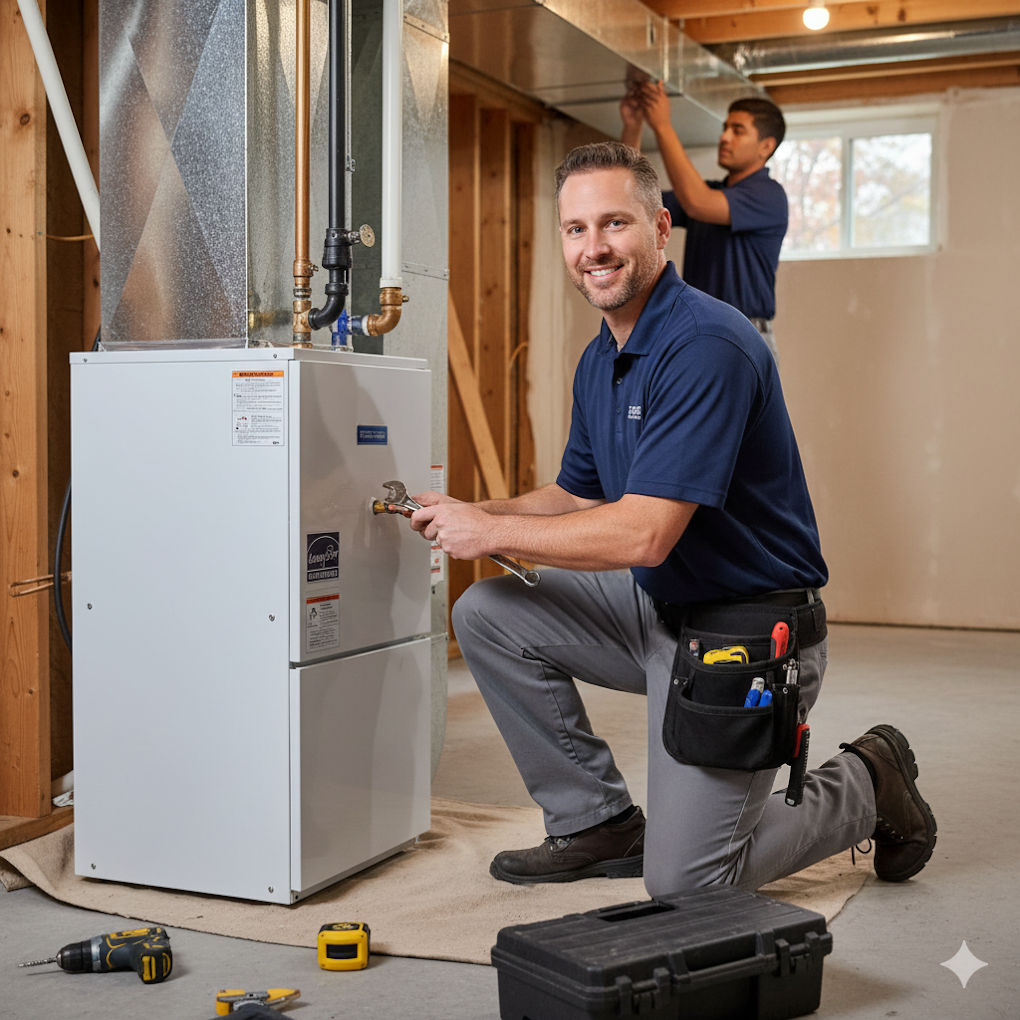
Heating maintenance is not a quick filter swap and a handshake. A proper tune-up is a full diagnostic and cleaning visit that touches every component responsible for heating your home safely and efficiently.
Below is what we check and service during a heating maintenance visit and why each piece matters.
Every maintenance visit starts with a full system inspection. For gas furnaces, that means checking the burner assembly, the heat exchanger for cracks or corrosion, the ignition system, the blower motor, the gas valve, and the exhaust flue. For heat pumps, we check the reversing valve, the defrost cycle, refrigerant levels, and coil condition. The U.S. Consumer Product Safety Commission urges homeowners to schedule a yearly professional inspection of all fuel-burning heating systems, including furnaces, boilers, fireplaces, and flues, to prevent carbon monoxide poisoning.
Dust, debris, and buildup reduce airflow and force the system to work harder. We clean the burners, the blower wheel, the evaporator coil (on heat pumps), and the condensate drain. A furnace running with dirty burners or a clogged blower does not just waste energy. It puts more stress on the heat exchanger, which is the most expensive component in the system and the one whose failure is most likely to create a safety concern.
Loose connections, worn contactors, and failing capacitors are some of the most common causes of mid-season breakdowns. We test electrical connections, measure amperage and voltage on major components, check thermostat calibration, and verify the safety controls are responding correctly. Catching a weak capacitor during a fall tune-up costs a fraction of an emergency repair call in January.
A clogged filter is the single easiest problem to prevent and the most common one we see. Restricted airflow from a dirty filter makes the system run longer, raises energy use, and can cause overheating that triggers the limit switch. We check the filter, recommend the right replacement schedule for your home, and measure airflow to make sure the system is moving air the way it should.
Before we leave, we verify that the system is producing the right output, cycling correctly, and maintaining the temperature split it was designed for. We note any components that are still working but showing signs of wear so you have time to plan rather than react.
Heating maintenance is easy to put off and just as easy to get wrong. A rushed visit that checks a few boxes without actually cleaning, testing, and measuring does not protect your equipment. We take the time to do it right. The U.S. Energy Information Administration notes that heating and air conditioning together account for more than half of a typical household's annual energy consumption. Keeping that equipment maintained is one of the simplest ways to keep utility bills under control.
What you get with B. Tucker:
Heating maintenance is one part of what we do. Below are the rest of our HVAC services across metro Atlanta. Click through to the page that matches what you need.
Furnace or heat pump replacement with same-week scheduling in most cases.
You are here.
New furnace, heat pump, or hybrid system installs for new construction and full system swaps.
Diagnostic and repair service for furnaces, heat pumps, and electric heat.
Replace your aging AC unit with an energy-efficient system sized right for your home.
Spring tune-ups that catch issues before the first 90-degree week.
Diagnosis and repair when a working system stops working right.
New AC installs for additions, remodels, and homes without existing central cooling.
HVAC service for small offices, retail spaces, and light commercial buildings.
Installation of rooftop units and split systems for light commercial properties.
Heating maintenance does not have to be complicated. Here is how a B. Tucker tune-up actually works.
Call us at 404-298-1314 or book online. PMA members get priority scheduling. We will confirm a date and time window that works for your schedule.
A technician arrives, inspects the full heating system from the thermostat to the exhaust, cleans critical components, tests electrical connections and safety controls, checks the filter, and measures system performance. The visit typically takes 60 to 90 minutes depending on the system type and condition. If we find something that needs attention, we explain what it is, why it matters, and what it will cost to address, with no pressure.
Before we leave, we walk you through what we found, what we cleaned or adjusted, and anything to keep an eye on before next season. PMA members get a service record on file so we can track how the system trends year over year.

Once a year for heating, ideally in early fall before the first cold snap. If you have a heat pump that handles both heating and cooling, schedule maintenance twice a year, once in spring for cooling season and once in fall for heating season. Our PMA covers both visits.
A full tune-up includes inspecting the heat exchanger, cleaning the burners and blower, testing electrical connections and safety controls, checking the thermostat, replacing or evaluating the filter, and verifying system output. For heat pumps, we also check the reversing valve, defrost cycle, and refrigerant charge.
Yes. A system running with dirty components, loose connections, or restricted airflow uses more energy to produce the same amount of heat. Routine maintenance also catches small problems before they become expensive emergency repairs. Most manufacturers require annual maintenance to keep the warranty valid, which protects your investment if a major component fails.
Our PMA is a plan that covers your heating and cooling tune-ups under one agreement. You get priority scheduling, both seasonal visits, and a service record on file. It takes the guesswork out of when to call and makes sure your system is checked before each season starts.
Most visits take 60 to 90 minutes. More complex systems or units that have not been serviced in several years may take longer, especially if there is heavy buildup to clean or multiple issues to document.
Yes. A well-maintained furnace typically lasts 15 to 20 years. Skipping maintenance leads to faster wear on critical components, especially the heat exchanger and blower motor, and can shorten the system's useful life by several years. Regular tune-ups also help maintain the system's rated efficiency over time rather than watching it decline.
Absolutely. Newer systems are more complex than older ones, with variable-speed motors, modulating gas valves, and communicating thermostats that all need periodic verification. Maintenance also keeps the manufacturer warranty valid. Skipping it on a brand-new system can void the coverage you just paid for.
If your heating system has not been serviced this year, or if you are not sure when it was last checked, now is the time to schedule. We will come to your home, inspect the full system, clean what needs cleaning, and let you know exactly where things stand. No pressure, no unnecessary repairs.


