
Open : 9:00am to 5:00pm weekdays


Office Address
4025 Pleasantdale Rd, Suite 250 Atlanta, GA 30340

Phone Number
404-298-1314

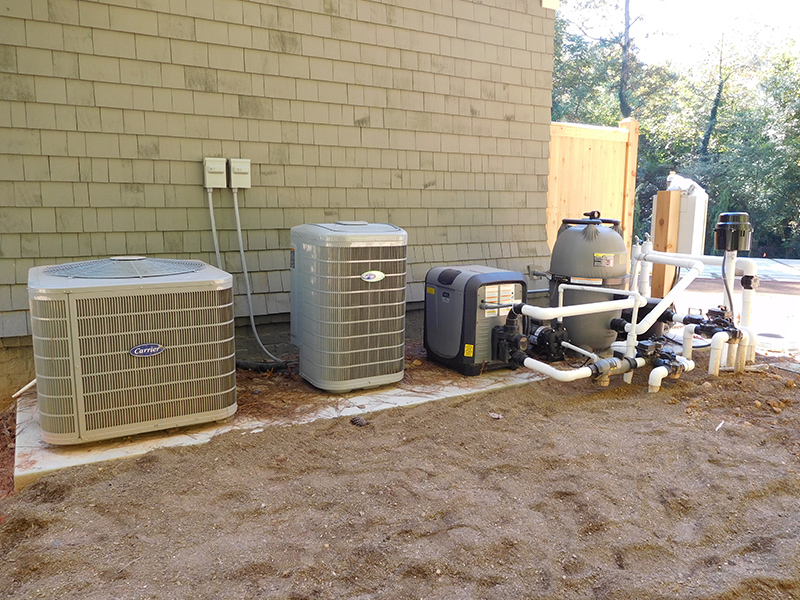
If you run a business in Chamblee, commercial HVAC service is probably not something you think about until the air stops moving. Then it becomes the only thing you think about. Georgia summers push equipment hard, and a system that limps along for a few extra months usually ends up costing more than the service call you kept putting off.
Chamblee sits close enough to Atlanta, Doraville, and Brookhaven that a lot of businesses here share the same building stock: older strip centers, converted retail spaces, and office parks with rooftop units that have been running since before anyone currently on staff was hired. That age catches up with a system eventually, and it rarely announces itself with a dramatic failure. It shows up in smaller ways first.
B. Tucker Heating & Air has served Atlanta-area businesses since 1978, which means the technicians showing up to a Chamblee office or retail space have usually seen the exact problem before, sometimes on the exact same building. That kind of familiarity matters when a system is sending mixed signals and a business owner just wants a straight answer about what is actually wrong.
In this article, you will learn about:
Keep reading to find out which of these signs your building is already showing, and what to do before a small problem becomes an emergency repair call in the middle of a heat wave.
A rising utility bill is one of the first places commercial HVAC trouble shows up, and it is also one of the easiest signs to explain away. Rates go up, summer runs long, everyone assumes the number will settle back down next month. Sometimes it does. Often it does not, and the building's HVAC system is the reason.
Heating and cooling account for a significant share of the energy a commercial building uses every year. According to the U.S. Department of Energy, heating and cooling make up around 35 percent of all energy consumption in buildings, more than any other single system. When that system starts losing efficiency, the bill is often the first place it shows up, weeks before anyone notices a comfort problem.
Not every spike in a utility bill comes from the HVAC system, but a few patterns are worth watching for:
If more than one of these shows up at the same time, the system is telling you something before it fails outright. A light commercial service visit can usually confirm whether the equipment itself is the culprit or whether something else in the building is driving the cost.
Older rooftop units and packaged systems lose efficiency gradually, not all at once. A compressor that used to run in short, efficient cycles starts running longer to hit the same set point. Refrigerant charge drifts. Coils get dirty in ways that are invisible from the ground.
The U.S. Environmental Protection Agency's ENERGY STAR program notes that the average commercial building can cut energy costs by up to 30 percent through a mix of no-cost actions, smart operations, and targeted upgrades, and HVAC performance is usually where that savings starts. For a Chamblee business running an older system through Georgia summers, that gap between what the equipment should cost to run and what it actually costs adds up fast.
A few things are worth checking before assuming the worst:
If the numbers still do not add up after that, it is worth reaching out for repair services rather than continuing to guess.
A properly sized system that has been maintained correctly should not be surprising anyone with its energy use, and a technician can usually spot the cause faster than a spreadsheet can. A compressor working harder than it should is often one of the first components to fail, and catching it early through AC repair costs far less than replacing a compressor that has already burned out.
Every commercial building has a spot that runs a little warmer or cooler than the rest, and most owners just live with it. The break room by the back door, the corner office that gets afternoon sun, the retail floor near the entrance. That is normal. What is not normal is when those differences get worse over time or start showing up in places that used to be fine.
Uneven temperatures often trace back to a system that has gone too long without routine heating maintenance, since a neglected system tends to lose balance across zones before it loses power outright.
Uneven temperatures usually trace back to one of a few causes: a system that was undersized or oversized for the space from the start, ductwork that has degraded or shifted, or a zoning setup that no longer matches how the space is actually used after a renovation or a change in layout.
Businesses that have added walls, moved departments, or converted storage space into work areas often outgrow the airflow design the system was built around. The equipment has not changed, but the building around it has, and the mismatch shows up as hot and cold spots that get harder to ignore.
Ventilation problems in particular can affect indoor comfort just as much as the temperature setting itself, since stale or unevenly distributed air makes a room feel worse than the thermostat reading suggests.
Older commercial buildings in the Chamblee and Decatur area frequently have ductwork that was patched, extended, or rerouted over the years without anyone re-checking the airflow balance for the whole system. A few signs point to a duct or airflow problem specifically:
Airflow problems rarely fix themselves, and they tend to get worse as ductwork ages further. A system diagnostics visit can map out exactly where the air is going and where it should be going instead, which is usually the fastest way to settle an argument between departments about whose office is too hot.
Regular air conditioner maintenance often catches duct and airflow issues early, before they show up as a full room going cold.
For buildings where the layout has genuinely changed, adding zoning dampers or updating to a smart thermostat setup built for commercial use can solve a problem that a repair alone cannot. Zoning lets different areas run at different set points off the same system, which matters a lot in a building where the front office and the back warehouse have completely different heat loads.
This is not the right fix for every uneven-temperature complaint, and a technician who actually walks the space can tell you whether zoning solves the real problem or just moves it somewhere else. Sometimes the answer is simpler than a new control system, and sometimes it genuinely is not.
A single breakdown is bad luck. Three breakdowns in a year on the same system is a pattern, and patterns are worth paying attention to before the next one happens on the hottest day of the summer with customers in the building.
The businesses that avoid this pattern are usually the ones that treat maintenance as something that can extend system lifespan, not just a box to check once a year.
Any piece of equipment can have an isolated failure: a capacitor that just happened to fail, a part that was defective from the factory. That is normal wear, and it does not necessarily mean the whole system is in trouble.
What is different is when repairs start clustering closer together, when the same component fails again after being replaced, or when a technician keeps finding new problems every time they come out for something unrelated. That pattern usually means the system as a whole is aging out, even if each individual repair looks minor on its own.
The businesses that manage to prevent summer AC breakdowns are usually the ones that caught this pattern early instead of treating each repair as a one-off.
Regular maintenance is the single biggest factor in how often a commercial system breaks down. A few guidelines worth following for most Chamblee commercial buildings:
Skipping maintenance does not save money in the long run. It just moves the cost from a scheduled visit to an emergency one, usually at a worse time.
The longer a failing system runs without attention, the more it tends to drag other components down with it. A struggling compressor puts strain on the electrical system. A refrigerant leak that goes unaddressed can damage the coil it was meant to cool. A heat pump running low on charge works harder to hit the same temperature, which shortens its remaining life even further.
For a business, the real cost of waiting is rarely just the eventual repair bill. It is the lost productivity, the uncomfortable customers, and the inventory or equipment that depends on stable indoor temperatures. Catching a decline early is almost always cheaper than catching it late.
Commercial HVAC service covers more ground than a lot of business owners expect, and knowing the difference between the service types helps when deciding what a building actually needs.
That range covers everything from a single repair call to full ventilation services for a building with air quality concerns. It can also mean straightforward air conditioner installation when a cooling unit reaches the end of its life. Or it can mean heating installation when a furnace or heat pump needs full replacement instead of another repair.
These three categories solve different problems, and confusing them usually means paying for the wrong one:
Metro Atlanta's Energy Star certified buildings covered more than 71 million square feet and saved over $60 million a year in energy costs, according to the U.S. Environmental Protection Agency, enough to rank the metro area fourth nationally for certified commercial buildings. Right-sizing a system through an installation services upgrade is often what gets a building from an old, inefficient setup into that kind of performance range.
That covers AC replacement scenarios, where a cooling unit has reached the end of its useful life. It also covers heating replacement decisions, since a furnace or heat pump can wear out on a completely different timeline than the cooling side.
A real commercial inspection goes well beyond a filter check. A technician should be looking at refrigerant charge, electrical connections, the condition of belts and bearings on older units, ductwork integrity, and how the system's SEER rating compares to what current equipment can deliver. Ventilation matters here too, especially in retail or food service spaces where air quality affects both comfort and health.
Businesses considering an upgrade often start from this kind of inspection, since it gives an honest picture of whether the existing equipment is worth repairing further or whether replacement makes more financial sense. A cleaning and inspection visit on a regular schedule also catches the kind of gradual efficiency loss that never shows up as an obvious problem until the bill arrives.
Chamblee sits inside DeKalb County, close enough to several other business hubs that many companies split their footprint across more than one area. A commercial HVAC partner familiar with Atlanta already understands the mix of older office parks and retail centers that define much of this corridor.
That same familiarity extends north to Decatur, where a lot of businesses face similar building-age issues. Decatur companies in particular often benefit from bundling routine maintenance services into a single seasonal visit rather than scheduling separate calls throughout the year.
It also covers Peachtree Corners, a market with its own mix of office and retail space. And it reaches Norcross, which sees a seasonal load pattern similar to Chamblee's. A commercial HVAC partner who already knows the building stock, permitting expectations, and seasonal patterns across the metro area saves time when something needs attention.
Buildings that share walls with retail neighbors or sit in older office parks also benefit from working with a team familiar with common AC problems specific to that kind of construction, rather than a generic residential approach applied to a commercial space. That local familiarity is often the difference between a diagnosis that takes an hour and one that takes all day.
A commercial HVAC system rarely fails without warning. It sends signals first, through a climbing bill, a room that never quite feels right, or a repair that keeps coming back. Businesses that catch those signals early spend less, deal with less disruption, and avoid the kind of emergency call that always seems to happen on the worst possible day.
Chamblee's mix of older office parks, retail centers, and light commercial buildings means every system has its own history and its own quirks. A system that runs fine for one business next door might already be struggling in a building with a different layout, a different age, or a different daily load. Treating the signs above as worth checking, rather than something to live with, protects both the equipment and the budget.
B. Tucker Heating & Air has worked on Atlanta-area commercial systems since 1978, and that history covers plenty of buildings just like the ones in Chamblee. If your business is showing any of the signs above, B. Tucker Heating & Air can send a technician out to find the real cause and lay out what it will take to fix it right.


